
Lehre.TestVerlE (Struktur)
Test and dependability (3V1Ü)
|
(G. Kemnitz) IT systems automate intellectual tasks: operational procedures, the control of processes and machines, design tasks, … A prerequisite for their use – and usually the most expensive feature of the product – is sufficient dependability. |
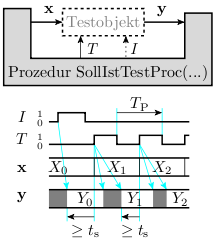
|
The key to this lies in carrying out checks
and rectifying any shortcomings identified in the process at three levels:
Target audience: Master’s students in Computer Science and those interested from other degree programmes Credits: (ECTS): 6
|
Slide sets
[F] -- Slide sets, [H] -- Handouts for printing.- [‘F1’] Key metrics, issues encountered during use
- Reliability: service model, availability, reliability, security.
- Problem handling: monitoring, format checks, value checks, re-request, majority decision, response upon detection, problem prevention.
- Website under construction
Organisation
Homework
The weekly homework assignments are available as PDF files with the filenames
(<anr> – exercise number, <name> – your name, <matr> – your matriculation number, <opt> – optional abbreviation if there are several files) by email to ha-tv@in.tu-clausthal.de by the dates specified in the schedule; these will be marked and returned. A total of 50 per cent of the homework marks is required for admission to the examination. For additional homework marks, up to 2 bonus marks are available for the written examination (equivalent to one grade level).
Autor: gkemnitz, Letzte Änderung: 27.10.2026 11:29:51
TU Clausthal 2020 Impressum